A jute sack is a strong, breathable bag woven from natural jute fiber, traditionally used to store and transport bulk goods. In everyday language, jute sacks are often referred to as jute gunny bags, hessian sacks, burlap bags, or simply gunny bags — all made from natural plant fiber that is biodegradable and eco-friendly.
Jute is one of the most popular natural fibers in the world, especially in South Asia, because of its strength, durability, and cost-effectiveness. India and Bangladesh are the largest producers and exporters of jute sacks, supplying agricultural and industrial markets across the globe.
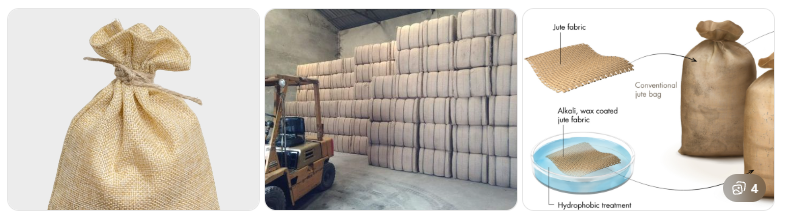
Types of Jute Sacks
Not all jute sacks are the same. The type you choose depends on usage, weight capacity, and industry requirements.
1. Agricultural Jute Sacks
Used for:
- Rice
- Wheat
- Paddy
- Maize
- Pulses
- Potatoes
- Onions
These sacks are breathable and designed for long-term storage.
2. Food Grade Jute Sacks
Specially made for food products where hygiene matters. Often used for:
- Sugar
- Flour
- Coffee beans
- Cocoa beans
They are usually odor-free and cleaner in finish.
3. B-Twill Jute Bags
B-Twill sacks are known for:
- Smooth texture
- Higher durability
- Uniform weaving
Used by government agencies and exporters.
4. Hessian Jute Sacks
Lightweight and economical.
Common in:
- Domestic trade
- Temporary storage
- Low-cost packaging
5. Laminated Jute Sacks
These sacks have a thin inner lamination.
Used when:
- Moisture protection is required
- Products are sensitive
6. Used / Recycled Gunny Bags
Previously used sacks, cleaned and resold.
Common in:
- Warehouses
- Low-cost applications
- Short-term use
Jute Sack Sizes & Weight Chart
Jute sacks are available in multiple standard and custom sizes.
Common Sizes:
- 40 kg jute sack
- 50 kg jute sack
- 60 kg jute sack
- 90 kg jute sack
- 100 kg jute sack
Typical Dimensions:
- 94 cm × 57 cm
- 100 cm × 60 cm
- 110 cm × 65 cm
Fabric Weight (GSM):
- 280 GSM – light duty
- 320 GSM – standard use
- 380 GSM – heavy-duty
- 420+ GSM – export & industrial use
Choosing the right size and GSM directly affects durability and cost efficiency.
Standard Sizes & Capacities
Here are typical jute sack measurements used in the market:
| Type | Approx. Size | Capacity |
|---|---|---|
| Standard B Twill | 44″ × 26.5″ (≈112 × 68 cm) | 90–100 kg |
| Binola Twill | 44″ × 26.5″ | ~90–100 kg |
| Light Cees | 43″ × 29″ | ~80–100 kg |
| Coffee / Specialty | ~40″ × 28″ | ~60–90 kg |
Smaller jute sacks are also available for 20–50 kg capacities, useful for retail and smaller bulk needs. Justdial
📌 Note: Sizes vary by manufacturer, and you can customize dimensions and fabric weight to suit specific packing requirements.
Uses of Jute Sacks Across Industries
1. Agriculture & Farming
Jute sacks are widely used in:
- Mandis
- Warehouses
- FCI storage
- Farmer cooperatives
Their breathable nature prevents grain spoilage.
2. Food Storage & Transportation
Used for:
- Rice mills
- Flour mills
- Sugar factories
They maintain product quality during transit.
3. Cement & Construction
Heavy-duty jute sacks are used for:
- Cement
- Minerals
- Sand (temporary use)
4. Export & International Trade
Many importers prefer jute sacks due to:
- Eco norms
- Sustainable packaging policies
- Easy disposal
5. Government Procurement
Indian government agencies still rely heavily on jute sacks for grain storage and distribution.
Jute Sack Price in India (Updated Overview)
Prices vary depending on quality, GSM, size, and quantity.
Approximate Price Range:
- New jute sack: ₹35 – ₹80 per piece
- B-Twill sacks: ₹60 – ₹120 per piece
- Used gunny bags: ₹18 – ₹35 per piece
Price Influencing Factors:
- Jute raw material cost
- Weaving quality
- Stitching strength
- Bulk order quantity
- Seasonal demand
- Government procurement cycles
👉 Bulk buyers always get better pricing. – Buy Jute Gunny bags
Jute Sack vs Plastic Sack – Honest Comparison
| Feature | Jute Sack | Plastic Sack |
|---|---|---|
| Eco-friendly | ✅ Yes | ❌ No |
| Breathable | ✅ Yes | ❌ No |
| Strength | ✅ High | ⚠️ Medium |
| Reusable | ✅ Yes | ⚠️ Limited |
| Disposal | Natural | Harmful |
| Govt support | Strong | Declining |
In long-term storage and exports, jute sacks outperform plastic sacks.
Government Support & Regulations for Jute in India
India is one of the world’s largest producers of jute. The government actively supports the jute industry through policies and mandatory usage.
The Ministry of Textiles oversees jute development and promotion.
Under the Jute Packaging Materials (Compulsory Use in Packing Commodities) Act, certain commodities like food grains and sugar are required to be packed in jute sacks.
Official reference:
👉 https://jutecomm.gov.in
(Website of the Office of the Jute Commissioner)
This legal backing ensures consistent demand for jute sacks every year.
How to Choose the Right Jute Sack (Buyer’s Checklist)
Before buying jute sacks, always check:
- ✅ GSM (fabric weight)
- ✅ Weaving tightness
- ✅ Stitching quality
- ✅ Moisture smell (should be neutral)
- ✅ Load capacity
- ✅ Supplier credibility
- ✅ GST & documentation
- ✅ Sample inspection
Never select jute sacks based on price alone. Quality issues cost more in the long run.
Jute Sack Manufacturers & Suppliers in India
Major jute production hubs include:
- West Bengal
- Bihar
- Assam
- Odisha
West Bengal remains the heart of India’s jute industry, with access to raw jute, skilled labor, and ports for export.
When selecting a supplier:
- Prefer manufacturers over traders
- Check factory photos
- Ask for bulk samples
- Verify GST and registration
Exporting Jute Sacks from India
Jute sacks are exported to:
- Middle East
- Africa
- Europe
- Southeast Asia
Export Advantages:
- High demand for eco packaging
- Low import restrictions
- Good profit margins
- Long shelf life
Key export requirements:
- Fumigation (if required)
- Quality certification
- Proper baling
- HS code compliance
Sustainability & Environmental Impact
Jute sacks are made from a renewable plant fiber that absorbs carbon dioxide while growing. Compared to plastic, jute has one of the lowest environmental footprints.
Environmental benefits:
- Improves soil health
- Biodegrades naturally
- No microplastics
- Supports rural livelihoods
Using jute sacks is not just a business decision—it is an environmental responsibility.
Government Support & Mandatory Packaging Norms
The Indian government has long supported the jute sector through laws like the Jute Packaging Materials (JPM) Act, 1987, which mandates that 100% of foodgrains and at least 20% of sugar must be packed in jute bags. This drives large, consistent demand for jute sacks from agencies like the Food Corporation of India (FCI) and state procurement bodies.
Jute board govt official site : http://jutecomm.gov.in//Notice.html
This is crucial: it makes jute sacks a government-backed product with a guaranteed market — something that gives suppliers and manufacturers confidence in long-term demand.
Why Jute Sacks Are a Smart Choice
Jute sacks are not just bags—they are a legacy of sustainable packaging that still makes sense in modern trade. With rising environmental awareness, government support, and global demand, jute sacks are positioned strongly for the future.
Whether you are buying for agriculture, business, or export, choosing the right jute sack means saving costs, protecting products, and supporting sustainability.
Get a Quote – Jute Sack Supplier & Exporter
If you are looking for a reliable jute sack supplier or exporter from India, contact us with your requirement details. We are committed to providing quality products, fair pricing, and dependable supply.
FAQs About Jute Sacks
What is a jute sack used for?
Jute sacks are used for storing and transporting grains, pulses, vegetables, cement, and other bulk goods due to their strength and breathability.
How long does a jute sack last?
With proper handling, a jute sack can last 2–5 years and can be reused multiple times.
Are jute sacks waterproof?
No. Jute sacks are breathable but not waterproof. Laminated versions offer limited moisture resistance.
Are jute sacks mandatory in India?
For certain commodities like food grains and sugar, jute packaging is mandatory under Indian law.
Can jute sacks be recycled?
Yes. They can be reused, repurposed, or naturally decomposed.