50kg vs 60kg vs 90kg जूट (Gunny) बैग: आपको किस साइज की ज़रूरत है?
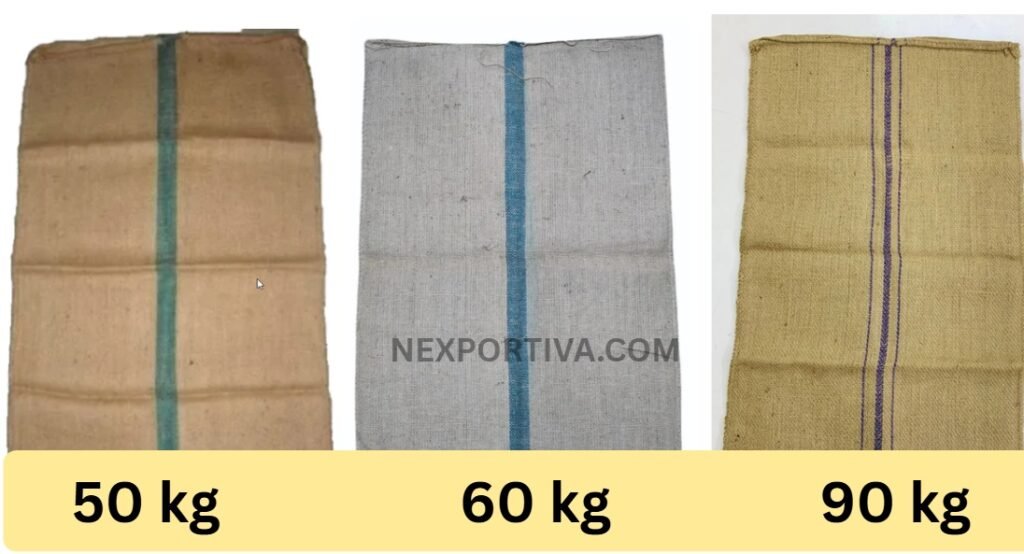
Choosing the right gunny bag size shouldn’t feel like solving a puzzle. We’ve spent years helping farmers, traders, and small business owners find exactly what works for their needs, and honestly, we’ve seen how one simple decision can save you money, time, and a whole lot of headaches down the road.
Whether you’re storing grain from your harvest, shipping products across the country, or looking for sustainable packaging options, the size of your jute bags matters more than you might think. Let’s walk through this together and figure out which bag size fits your world best.
Table of Contents
- Why Bag Size Actually Matters
- Understanding the Three Popular Sizes
- Detailed Size Comparison
- Which Industries Use Which Size?
- How to Choose Your Perfect Size
- Common Mistakes People Make
- Cost Considerations
- Quality Tips When Buying Used Bags
- Frequently Asked Questions
Why Bag Size Actually Matters (More Than You’d Think)
Here’s something we learned early on: the wrong bag size doesn’t just mean a poor fit. It means wasted storage space, higher shipping costs, back-breaking labor, and sometimes even product damage.
We once worked with a coffee trader who was using 90kg bags for his beans. Sounds efficient, right? Bigger is better? Not quite. His workers were struggling to lift them, damage rates went up, and he was actually losing money. After switching to 60kg bags, his operation ran smoother, and his team thanked him for it.
The right size bag creates a ripple effect of good things in your business. It’s about working smarter, not harder.
Understanding the Three Popular Sizes
The 50kg Gunny Bag: The Compact Workhorse
Dimensions: Typically 75cm x 50cm (approximately)
Think of the 50kg bag as your nimble, easy-to-handle option. We love recommending these to businesses where manual handling is the norm and speed matters.
These bags hit a sweet spot. They’re large enough to be economical but small enough that one person can comfortably lift and move them without calling for backup. If you’ve ever thrown out your back lifting something too heavy, you’ll understand why this matters.
What makes them special:
- Easy single-person handling
- Perfect for retail and smaller operations
- Faster loading and unloading times
- Better for products that need frequent access
- Ideal when storage space is vertical (easier stacking)
The 60kg Gunny Bag: The Balanced All-Rounder
Dimensions: Typically 80cm x 55cm (approximately)
If there’s a “Goldilocks” bag in the gunny world, this is it. Not too big, not too small, just right for most agricultural and commercial applications.
We sell more 60kg bags than any other size, and there’s a reason for that. They strike an almost perfect balance between capacity and manageability. When we talk to customers who aren’t quite sure what they need, this is often where we start the conversation.
Why people love them:
- Still manageable for most adults to handle
- Maximizes storage without sacrificing safety
- Works across multiple industries
- Standard size for many grain markets
- Good resale value if you’re buying used
- Transport companies are familiar with this size
The 90kg Gunny Bag: The Heavy-Duty Champion
Dimensions: Typically 90cm x 60cm (approximately)
Now we’re talking serious capacity. These bags are for operations where mechanized handling is available, or where storage efficiency trumps everything else.
We’re honest with our customers: don’t choose 90kg bags just because they seem more economical on paper. We’ve seen too many people regret that decision when reality hits and they realize they need equipment or extra workers to move them around.
Best suited for:
- Mechanized operations with forklifts or loaders
- Long-term storage where bags won’t move often
- Bulk traders dealing in large volumes
- Industries with dedicated loading crews
- Situations where floor space is at a premium
Detailed Size Comparison
Let’s put everything side by side so you can see the real differences:
| Feature | 50kg Bags | 60kg Bags | 90kg Bags |
|---|---|---|---|
| Capacity | 50 kilograms | 60 kilograms | 90 kilograms |
| Handling | One person, easy | One person, moderate | Two people or equipment |
| Loading Time | Fast individual bags | Moderate | Slower without equipment |
| Storage Efficiency | Good vertical stacking | Excellent balance | Maximum floor space use |
| Worker Safety | Minimal risk | Low to moderate risk | Requires proper equipment |
| Typical Price (Used) | Most affordable per bag | Mid-range | Higher per bag, lower per kg |
| Transport Flexibility | Highest | High | Moderate |
| Best For | Retail, small farms | General agriculture | Bulk operations |
Which Industries Use Which Size?
50kg Bags: The Versatile Choice
We’ve supplied 50kg bags to such a diverse range of customers. Here’s where they shine:
Small-Scale Farming: Family farms love these because they can handle their harvest without hiring extra labor. One farmer told us, “I can fill, lift, and stack these myself. That’s worth everything to me.”
Retail Operations: If you’re selling products in smaller quantities or need to break down bulk orders, 50kg bags let you work efficiently without overwhelming your space.
Urban Warehouses: Limited space? These stack beautifully and you can organize inventory without needing a forklift.
Food Processing Units: When you’re moving ingredients around a facility multiple times a day, lighter bags mean faster workflow and less fatigue.
60kg Bags: The Industry Standard
This is where most of our agricultural customers land:
Grain Trading: Rice, wheat, pulses – 60kg has become almost standard in many markets. There’s a reason for that. It’s what buyers expect, it’s what transport companies are set up for, and it just works.
Coffee and Tea: Plantation owners appreciate how these bags maximize capacity while still being manageable during the crucial sorting and grading process.
General Agriculture: From vegetables to animal feed, this size handles most agricultural products beautifully.
Construction Materials: Sand, small aggregates, and other construction supplies often move in 60kg bags because construction crews can handle them efficiently.
90kg Bags: When Capacity is King
These are specialist bags, and we’re very clear about when they make sense:
Large-Scale Grain Operations: When you’re dealing with hundreds of tons and have proper infrastructure, 90kg bags maximize your storage capacity dramatically.
Industrial Raw Materials: Manufacturing facilities with material handling equipment can process these quickly.
Export-Focused Businesses: Some international markets specifically request larger bags, and if you’re shipping containers, every bit of space utilization counts.
Cooperative Storage: When multiple farmers pool resources for storage, larger bags can make sense because the handling is centralized and mechanized.
How to Choose Your Perfect Size (Our Practical Framework)
We’ve helped thousands of customers make this decision, and here’s the framework we use:
Step 1: Be Honest About Your Handling Capability
Can you lift 50-60kg comfortably? Most healthy adults can, but it’s not easy. Can you do it repeatedly throughout a work day? That’s different.
Do you have equipment like forklifts, trolleys, or conveyor systems? If yes, larger bags might work. If no, think carefully.
Step 2: Calculate Your Total Volume
How much total product are you dealing with? If it’s 500kg total, five 90kg bags makes no sense. Twenty 50kg bags might seem like more work, but it gives you flexibility.
If you’re handling 50 tons, well, that’s a different conversation, and we’d probably steer you toward 60kg or 90kg bags.
Step 3: Consider Your Storage Space
Measure your storage area. Sometimes vertical space is your friend, and smaller bags that stack higher work better. Other times, you want to maximize floor space, and larger bags make sense.
Step 4: Think About Frequency of Access
Will you need to access and move these bags regularly? Go smaller. Setting them up once for long-term storage? You can go bigger.
Step 5: Factor in Your Team
This is huge. We’ve seen operations fall apart because someone ordered bags that were too heavy for their team to handle safely. Your people’s wellbeing matters, and it directly affects your productivity.
Common Mistakes People Make (Learn from Others!)
Mistake #1: Choosing Size Based Only on Price
Yes, 90kg bags cost less per kilogram of capacity. But if you need to hire an extra worker or rent equipment to move them, you’re not saving money at all.
Mistake #2: Ignoring the Human Factor
We had a customer who insisted on 90kg bags despite our advice. Three months later, he was back buying 60kg bags because his team was exhausted and injuries were happening. The “savings” cost him far more in the end.
Mistake #3: Not Testing First
If you’re unsure, buy a small quantity of different sizes and actually use them in your operation for a week. The right answer will become obvious fast.
Mistake #4: Forgetting About Transportation
Some transport vehicles and loading docks are optimized for certain bag sizes. Check with your logistics partners before committing to large orders.
Mistake #5: Overlooking Local Market Standards
If everyone in your region or industry uses 60kg bags, there’s probably a good reason. Going against the grain (pun intended) can create unnecessary complications.
Cost Considerations: The Real Math
Let’s talk money, because that’s what drives most decisions:
Initial Purchase Cost
For used bags (which we specialize in), here’s roughly what you’re looking at:
- 50kg bags: ₹15-25 per bag
- 60kg bags: ₹20-30 per bag
- 90kg bags: ₹25-40 per bag
But here’s the thing – don’t just look at the bag cost.
Hidden Costs to Consider
Labor costs: If 90kg bags require two people or equipment, factor that in. It might double your handling costs.
Speed of operation: Smaller bags might cost more upfront but allow faster loading/unloading, which means more productivity.
Damage and spillage: Overstuffed or improperly sized bags lead to tears and product loss. We’ve seen customers lose more in spillage than they saved on bags.
Storage optimization: Sometimes paying slightly more for the right size saves you on warehouse costs because you use space more efficiently.
The Smart Buyer’s Approach
Calculate your total cost of ownership. Include the bag price, handling costs, time factors, and potential damage. When we do this math with customers, the “cheapest” option often isn’t the most economical.
Quality Tips When Buying Used Bags
Since we’re passionate about used gunny bags, let’s make sure you get good ones:
Our 7-Point Quality Checklist
1. Check the Jute Integrity Run your hands over the weave. It should feel strong, not brittle or papery. Quality jute has a certain suppleness even when used.
2. Look for Tears and Holes Small wear is fine – these are used bags, after all. But holes bigger than a coin or tears along seams mean trouble. We don’t sell bags like that, and you shouldn’t buy them.
3. Smell Test Yes, really. Bad odors can indicate mold, chemical contamination, or previous use with problematic materials. Good used bags should smell earthy and natural, maybe a bit dusty, but nothing offensive.
4. Examine the Stitching Pull gently at the seams. They should hold firm. If threads are coming loose easily, the bag won’t last.
5. Check for Stains Light discoloration is normal. Dark stains, especially oily ones, might indicate previous use with chemicals or products you don’t want near yours.
6. Test the Weight Capacity We always recommend testing a sample bag with actual product before buying in bulk. Fill it up, move it around, see how it performs.
7. Ask About Previous Use Reputable sellers (like us!) will tell you what products were previously stored in the bags. This matters for food safety and contamination concerns.
Frequently Asked Questions
Can I mix different sizes in my operation?
Absolutely! In fact, many smart operators do. Use 90kg bags for long-term storage and 50kg bags for daily operations and retail. We’ve set up many customers this way.
How long do used gunny bags last?
With proper care, used jute bags can easily give you 2-3 more years of solid use. We’ve had customers using bags for 5+ years. Store them dry, keep them clean, and they’ll serve you well.
Are used bags safe for food products?
When sourced from reputable suppliers who know the bags’ history, absolutely. We ensure our bags come from food-grade applications and are suitable for reuse with similar products.
What if I choose the wrong size?
Don’t panic – it happens. Good suppliers (hint: us!) will often work with you on exchanges if you realize quickly that the size isn’t right. This is why we always recommend starting with a smaller order.
Can these bags be reused again after I’m done?
Yes! That’s the beauty of jute. After you’re done, someone else can use them, or they can be composted. They’re biodegradable and eco-friendly, which is why we’re so passionate about the used bag market.
Which size do you personally recommend?
Honestly? For most people reading this, we’d say start with 60kg bags. They’re the safe bet. If you have specific needs that push you toward 50kg or 90kg, those factors will be obvious to you.
Our Final Thoughts
Choosing between 50kg, 60kg, and 90kg gunny bags isn’t just about numbers on a spec sheet. It’s about understanding your operation, respecting your team’s capabilities, and making a choice that works in the real world, not just on paper.
We’ve seen how the right bag size can transform an operation – smoother workflows, happier workers, lower costs, and fewer headaches. We’ve also seen the frustration when someone gets it wrong.
Take your time with this decision. Measure twice, order once. And if you’re still unsure? Reach out. We love talking about this stuff (yes, we’re those people who get excited about jute bags), and we’d rather spend ten minutes helping you choose right than see you struggle with the wrong size.
Remember: there’s no universally “best” size. There’s only the best size for you, your operation, and your specific needs. Find that, and you’ll wonder why you ever stressed about it.
Ready to find your perfect bag size? Browse our selection of quality used gunny bags in all three sizes, or contact us for personalized advice. We’re here to help, not just to sell.